 The Shift
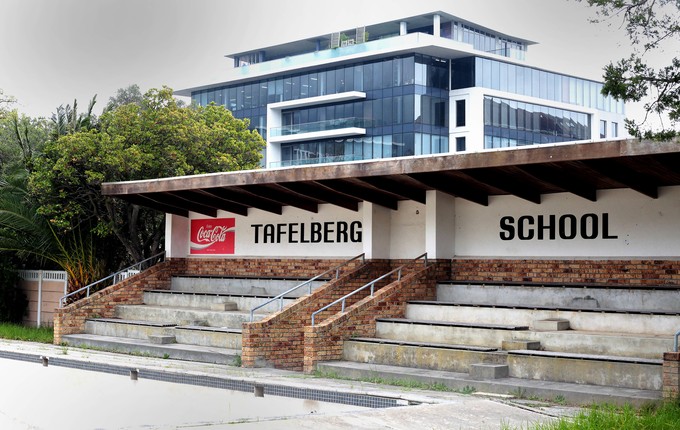
We got to ask some questions to our partners at Ndifuna Ukwazi about the recent Tafelberg win.
The Shift: This case started in 2016 with a march to the Tafelberg site and ended a decade later in the Constitutional Court. What kept the campaign, and the communities behind it, going through two lower-court losses and years of delay?
Buhle: What kept the campaign and the communities behind it going was a combination of moral clarity, grassroots ownership and strategic persistence. From the outset we insisted that public land must serve the public interest and that the struggle was about dismantling apartheid spatial patterns.
In 2020 the High Court vindicated that position and set aside the sale of Tafelberg; the Province appealed and the Supreme Court of Appeal took a different view on some legal questions, which was a setback, but we did not fold. We continued to combine patient, evidence‑based organising with strategic litigation, keeping the issue politically visible through marches, submissions, media and coalition work with our movement partners. That mix of community leadership, documentary evidence, legal strategy and public pressure is what sustained the campaign through delays and judicial turns until the Constitutional Court ultimately agreed with Ndifuna Ukwazi and Reclaim the City that government has a constitutional obligation to address spatial justice and that location matters for the right to adequate housing.
What is even more important is that we have now forced the provincial government through a public participation process that started in 2025 to use the Tafeleberg site for social housing and currently there are concept designs that could give us a yield of 252 social housing and 151 affordable housing on the site and this shows the power of people centred organising and that we should use both the theatre of the oppressed and courts as sites of struggle and the next step for us is to monitor the public participation process until these concept designs are adopted and implemented because because people need housing.
The Shift: The Constitutional Court noted the Province’s public participation process was little more than a “tick-box exercise,” despite nearly 5,000 submissions in 2016. What did real, meaningful participation look like from where you stood, and what should other governments learn from the gap between the two?
Buhle: When the Constitutional Court described the Province’s process as little more than a “tick‑box exercise,” it was reflecting what we saw on the ground: participation after a sale contract has been concluded is meaningless. From our perspective, meaningful participation begins early, when options are still being developed, and it is resourced, accessible and two‑way. Communities must have timely access to plans and feasibility studies in plain language; meetings must be held where and when people can attend; and marginalised groups must be provided with technical support to engage substantively. Meaningful participation must be capable of changing outcomes, not simply informing a decision already made. Governments should learn that counting submissions is not the same as engaging with them, that regulations and procedures must require substantive responses to public input, and that participation requires time, money and independent facilitation when power imbalances threaten capture. The Court’s finding that the relevant WCLAA regulations are unconstitutional (albeit suspended for twelve months) underscores the need to rebuild participatory rules so they are effective in practice, not just on paper.
The Shift: What does accountability look like now? The Province and City have three months to report back with real numbers; projects, budgets, timelines. What will your team be watching for in those reports?
Buhle: Accountability now must be concrete, measurable and enforceable. The Court’s supervisory order requiring the Province and City to report to the High Court within three months with policies, projects, budgets, coordination steps and timelines creates a real opportunity to translate judgment into delivery. We will be watching for line‑item budgets, project lists with unit targets for social or inclusionary housing in or immediately adjacent to the CBD/Sea Point, firm start and completion dates. The reports must also show compliance with GIAMA and the Western Cape Land Administration Act’s asset‑management requirements: land cannot be treated as “surplus” without rigorous records showing why other public or service uses were considered and ruled out. We will expect clear coordination mechanisms between spheres of government, evidence going forward we will monitor all land disposals to make sure that public interest is considered and that other state departments have been consulted before the decision to dispose of public land because public land should be used for its social value and not as a mere commodity. Red flags for us will be high‑level estimates without line items, indefinite timelines, failure to propose immediate short‑term deliverables because as the apex court noted that the municipality has quite a lot of pipeline projects that dont ever translate into housing on the ground and for us this is important because people will not live in pipeline projects, people need roofs over their heads pushing for implementation of the pipeline projects is of paramount importance for us to make sure that the 600 000 housing backlog in city is addressed.
The Shift: Spatial injustice isn’t unique to Cape Town. What would you say to housing activists, policymakers, or grassroots organizers elsewhere in the world who are watching this ruling and wondering if it’s replicable in their own context?
Buhle: The Tafelberg judgement is a powerful precedent against the neoliberal notion of commodifying public land; it emphasises that public land should be used for public good, and this proves that marginalised communities can successfully challenge state land use management using both the theatre of the oppressed and the courts as sites of struggle. It offers a blueprint for housing activists across the globe to use the full arsenal of their activist tools and to take an intersectional approach in fighting against gentrification and urban exclusion.