 Sam Freeman
 Julieta Perucca
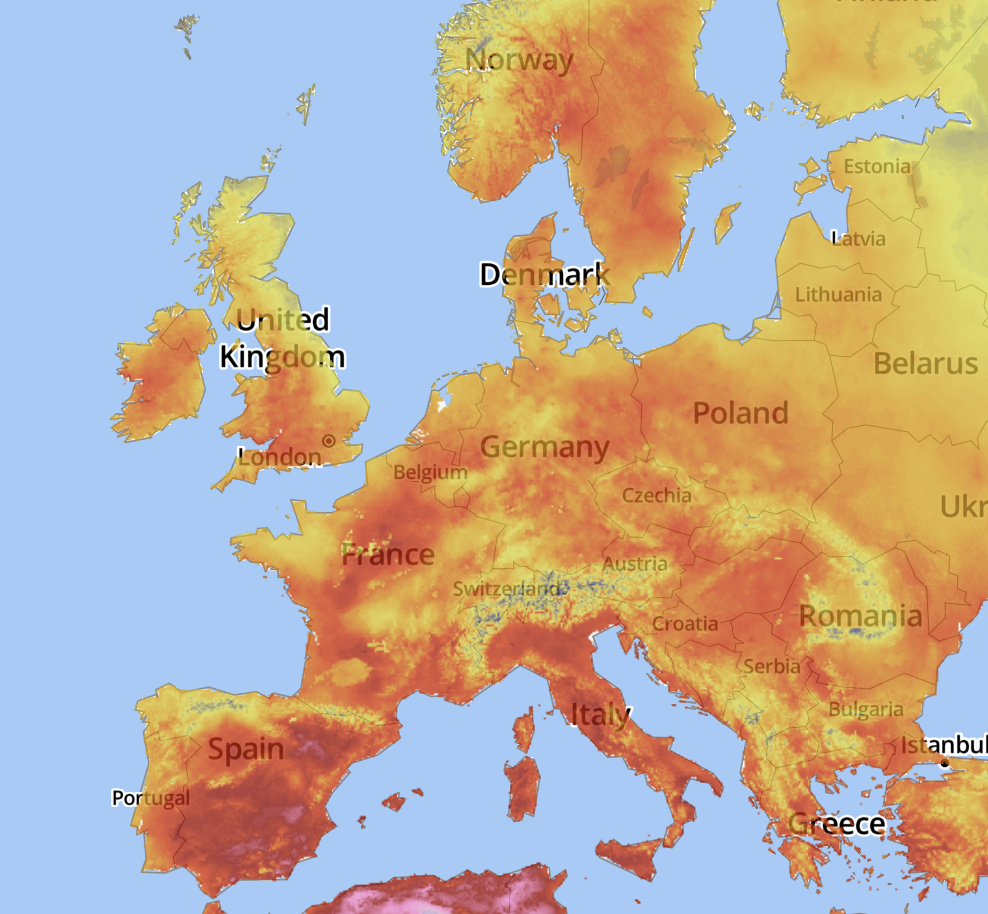
Another heatwave has reached Europe.
After record-breaking temperatures at the end of June caused the deaths of an estimated 1,300 people across the continent, meteorologists are now predicting temperatures to rise again across July and August. Extreme weather – including heatwaves – is no longer exceptional. The failure of governments to address climate change means we must now suffer the consequences, and one thing is clear: Europe is not ready.
Without access to resilient and adequate housing, extreme weather can be deadly. In France, for example, the June heatwave led to around 1,000 excess deaths and a 40% rise in the number of people dying at home. In the UK, recent data shows that 1 in 6 babies, and 1.6 million children, now live in an overheated home, putting them at much higher risk of life-threatening conditions, including Sudden Infant Death Syndrome.
The current collision course that Europe finds itself in is a direct result of governments failing to uphold their international legal obligations to address both the climate and housing crisis. Moreover, governments often fail to even see the intersection of these two issues. But the importance of home in increasingly volatile climates has now come into sharp focus. Governments have an obligation to act with the utmost urgency to ensure all households – but particularly those who are most vulnerable – are properly equipped to withstand what is to come.
While small steps have been made to, for example, retrofit homes and provide some relief from extreme weather, these are not sufficient. Our housing systems are stacked against those who are already most vulnerable. Spiralling unaffordability in cities across Europe is pushing marginalized communities into housing that is ill-equipped to withstand extreme climate patterns, or even worse into homelessness. Evidence from London, for example, shows homes in the periphery of the city are more likely to be overheated, and in France, campaign groups have shown that almost 30% of deaths among those living in homelessness occur during summer months.
Our dependence on turning homes into vehicles for investment and profit-making is a key driver of insecurity in the face of increasingly volatile climate patterns. Not only has it driven unaffordability in European cities, forcing people onto the streets or into increasingly inadequate or overcrowded housing, it has also affected the quality of the housing that is being built, often driven by profit margins over community need. And because building housing through clean construction methods that don’t impact the environment is often deemed too expensive, the construction and operation of housing is in turn driving carbon emissions, creating a vicious cycle that governments are increasingly struggling to break out of.
If extreme weather is our new normal – as it almost certainly now is – governments need to move beyond tinkering at the margins. We need to rethink our housing systems and rebuild them around one fundamental truth – that access to safe, decent housing is a human right, and that only by realising this right for all can we ensure we are ready to face the ever-increasing extremes of our climate.
Follow this blog series to learn how a human rights-based systems shift can promote climate resilience for all in Europe.