 Julieta Perucca
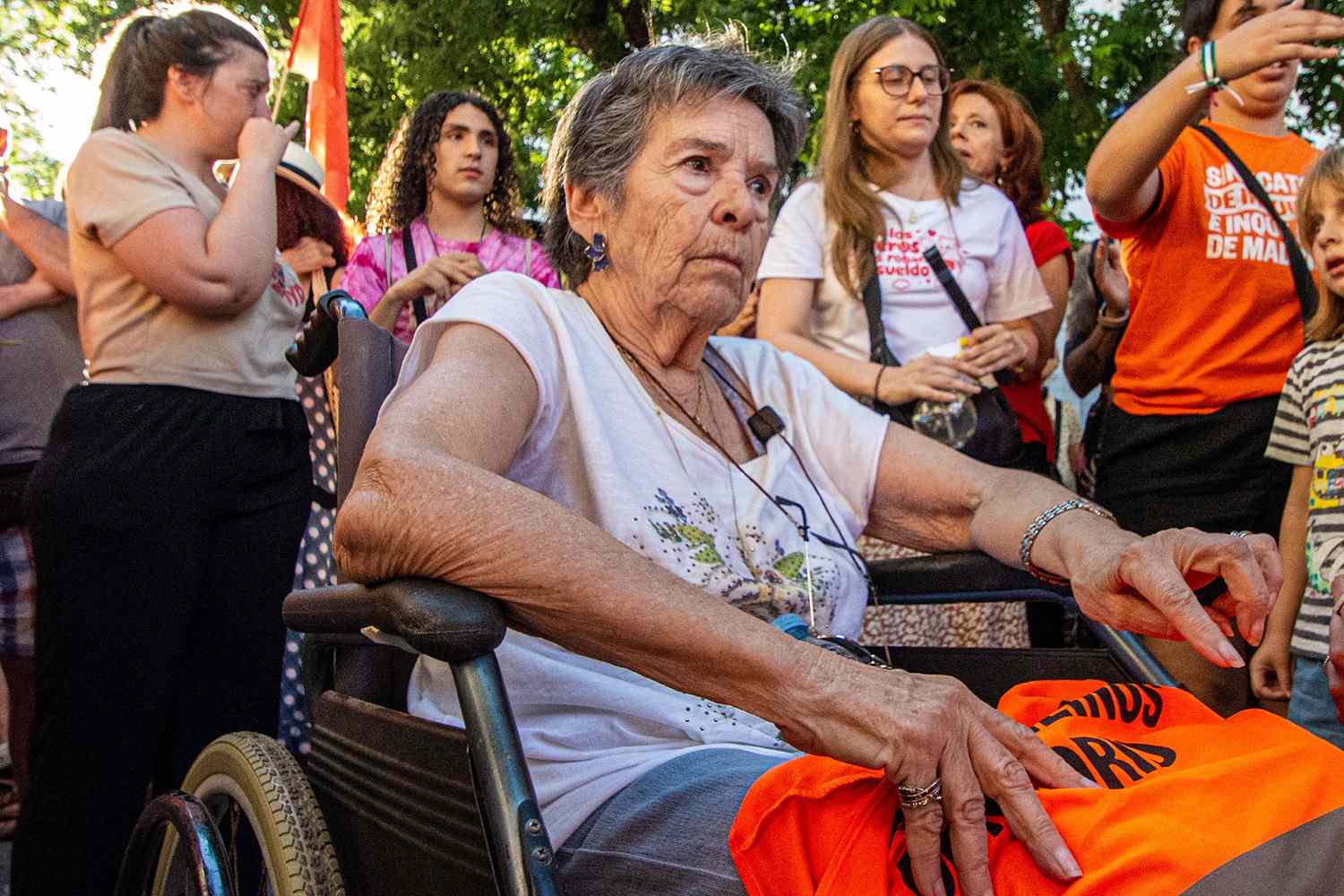
Outrage over the eviction of Maricarmen Abascal, an 87-year-old woman in Madrid, has put housing policy at the centre of public debate across Spain and catalyzed pushback across the rest of Europe and North America. Her case has become a symbol of the cruelty embedded in housing systems not only in Spain but around the world. For days, people have taken to the streets across Spain with a clear message: we must dismantle the housing industry, stop the speculators, and guarantee the right to housing. But the outrage has not been directed at governments alone.
Two weeks ago, in Madrid, housing advocates from over 140 organizations across the world protested outside one of the largest real estate development conferences in Europe, where speakers from Blackstone, Blackrock, Brookfield Asset Management, and the European Investment Bank, as well as the Mayor of Madrid and other local officials were gathered. The agenda included, among other things, discussing the new opportunities in real estate investment and the ‘risk and return profiles of … opportunistic investments.’
The business model that sees housing as a low risk, high return investment opportunity has largely delivered over the past few years, leading to stable profits for asset managers like Blackstone and Blackrock, but also institutional investors like pension funds and sovereign wealth funds. The levers for these high yield returns, however, often grossly disadvantage tenants and locals. They are premised on, for example, purchasing undervalued assets (homes), turning over “low-quality” existing tenants to “higher quality” renters (those paying affordable rents to those willing to pay market or above market prices, for a slightly modified home) or purchasing vacant homes or long-term rental units and converting them into short-term vacation rentals. This has fuelled the housing unaffordability crises, spurring evictions of low- or fixed-income tenants, making entire communities either unaffordable or out of reach for locals. Across the EU, housing prices have risen almost 60% in a decade; in Madrid and Paris, the average rent now exceeds the entire minimum wage.
Despite growing public outcry over many years, including referendums, citizens initiatives, protests, and rent strikes, largescale investors in housing have failed to acknowledge the imminent risk to returns posed by social upheaval that is now literally at the doorstep, yelling outside of the conference center.
This is a gross miscalculation. Social risk presents material financial risk, and markets have already started to show the impact.
When Spain’s prime minister announced a package of housing measures in January of 2025, shares in Neinor Homes, the country’s largest listed developer, fell almost 7% in a single day. A year later, when Donald Trump announced he would ban large investors from buying single-family homes, America’s biggest single-family landlord, owned by Blackstone, lost more than 7% in an afternoon. This was a direct reaction to the political risk investors had failed to account for.
And piecemeal policy scares are potentially just the beginning. When public anger reaches this pitch, governments are forced to act, and not in favour of industry, creating the exact environment that erodes stable, long-term returns.
Last week, Spain published two decrees that were voted down by opposition parties because they had the potential to fundamentally change the business practices of corporate investors. They proposed freezing evictions into homelessness, freeze rent increases, regulate temporary accommodations, and make rental contracts indefinite. As a result of this failed vote, the country is now facing a national election, focused on housing as the main issue, where the people, through their vote, will have a say on their housing policy. Elections have the potential to lead to even more stringent policies towards investors. In Berlin, recent elections saw the Die Linke party receive the most votes, running on a platform that called for the expropriation of rental homes from any corporate landlord holding more than 3,000 units, so that they may be converted to social or non-market housing. Other places like Wales, Plaid Cymru won their election on the promise that they would commit to adopting national right to housing legislation, that would transform business practices in the region so that they align with human rights. Even the prime minister of the UK, a country which has long pushed back on the need for the legal incorporation of economic, social and cultural rights, has signaled a commitment to recognising housing as a human right.
The industry has experienced this before, failing to take climate change seriously, until government regulation, stranded assets, insurance losses and new disclosure rules forced them to assess its impact on returns. Housing is on a very similar path, and investors shouldn’t miss the opportunity to be part of the solution, rather than on the sharpest ends of it.
So, what does being part of the solution look like? It starts with raising the floor on business practices and adjusting the expectations of return and profits so that it embeds human rights, social well-being, and sustainability. That means no evictions into homelessness, ever. It means real security of tenure, so long-term tenants are not pushed out when a building changes hands. It means rents tied to what local people can actually pay, not what the market will bear, and making the most out of existing buildings: no conversion of long-term homes into short-term rentals and prioritizing residential use. And it means human rights and climate due diligence built into every acquisition.
The Shift has created a set of guidelines to assist institutional investors in residential real estate align their business practices with human rights, thereby reducing risk and creating the conditions for stable, long-term returns alongside housing affordability.
While it is ultimately up to governments to enact legislation that raises the floor so that investment does deliver housing systems that realize human rights, there is immense potential for those investors who move first, not just to ensure they avoid the next sell-off, but also to prevent incredible reputational risk, and at the same time have a hand in creating housing systems that deliver stable returns for decades.
The hundreds of protesters outside the Madrid real estate conference should be a wake-up call for investors: the current business model has reached its limits. Unless the industry listens to people and changes course, the risk to returns is real and imminent. Housing is a human right first and foremost, and a failure to create a business model that works within that framework will be a costly mistake.